Our septic services

Septic maintenance, repairs and installs.

Three services, one trade. Mr. Septic works on septic systems and nothing else, so the people who put a system in are the same people you call when it needs looking after.

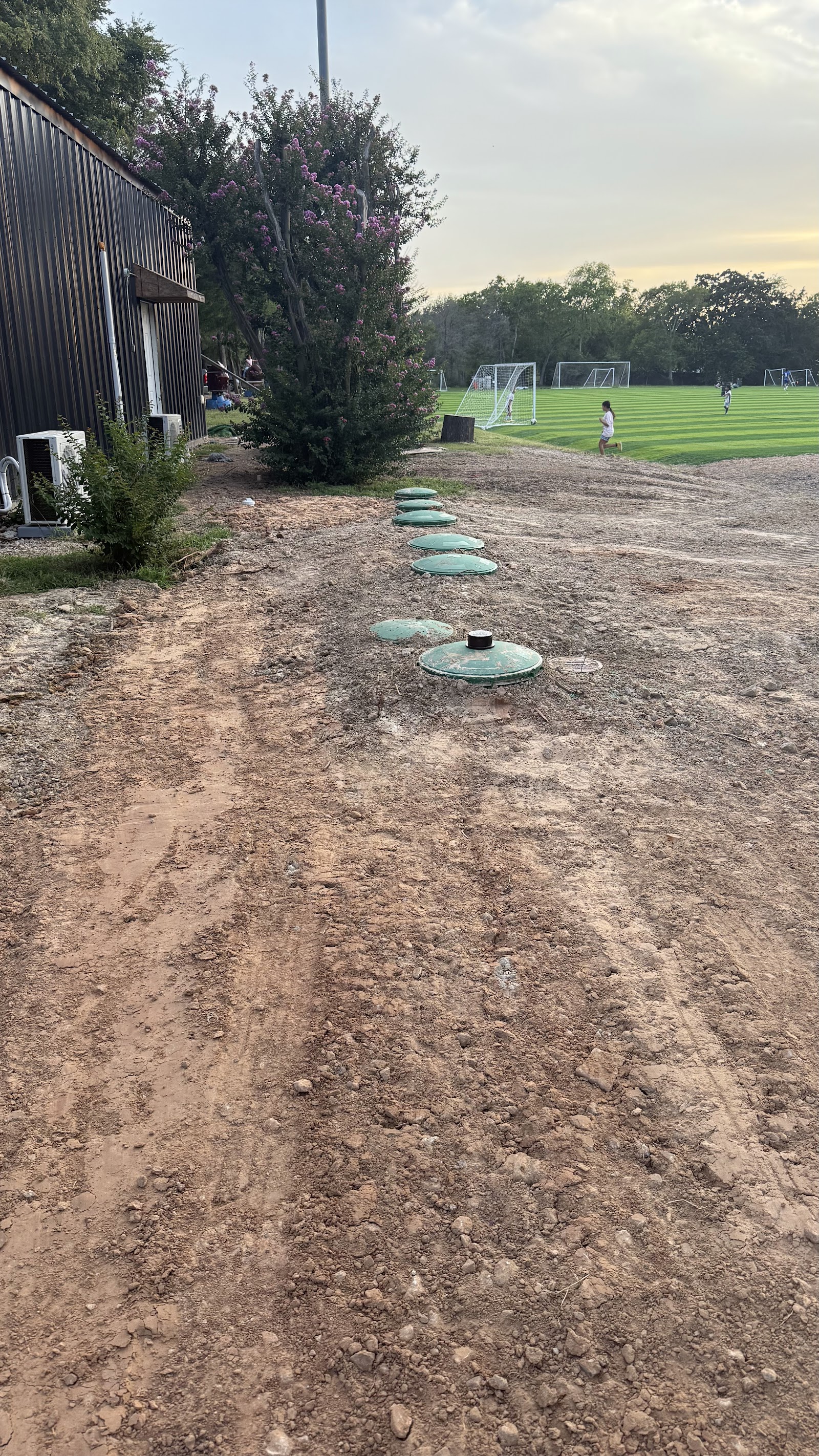
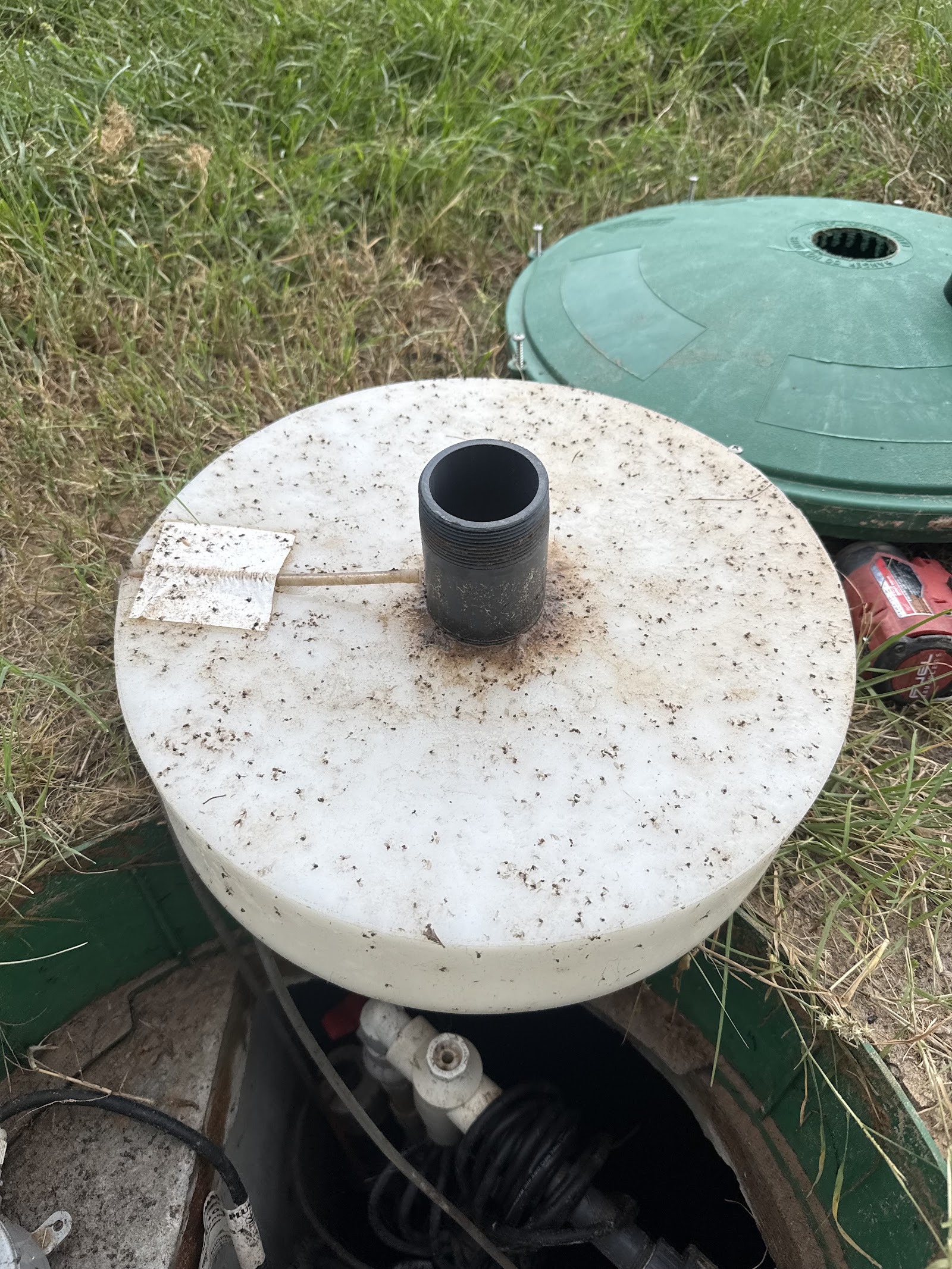
Row of green septic tank maintenance lids installed in dirt near a metal building and soccer field Septic tank effluent filter cover with vent pipe in a grass yard, green access lid nearby

Lids and filter covers at grade make every future visit easier.

Septic maintenance

A septic system that gets looked after on schedule rarely surprises anyone. One that gets ignored eventually sends solids into the drainfield, and that's the expensive part to fix.

We'll look at how your household uses water and how big the tank is, then tell you how often your system actually needs attention. You get a recommendation for your property, not a generic number pulled off a sticker.

Good for
Homes and properties already on a septic system
Why it matters
Catches buildup and worn parts before they become repairs

Septic repairs

Most septic problems announce themselves: an alarm on the control panel, drains that slow down across the whole house, a smell near the tank, or a wet patch that never dries.

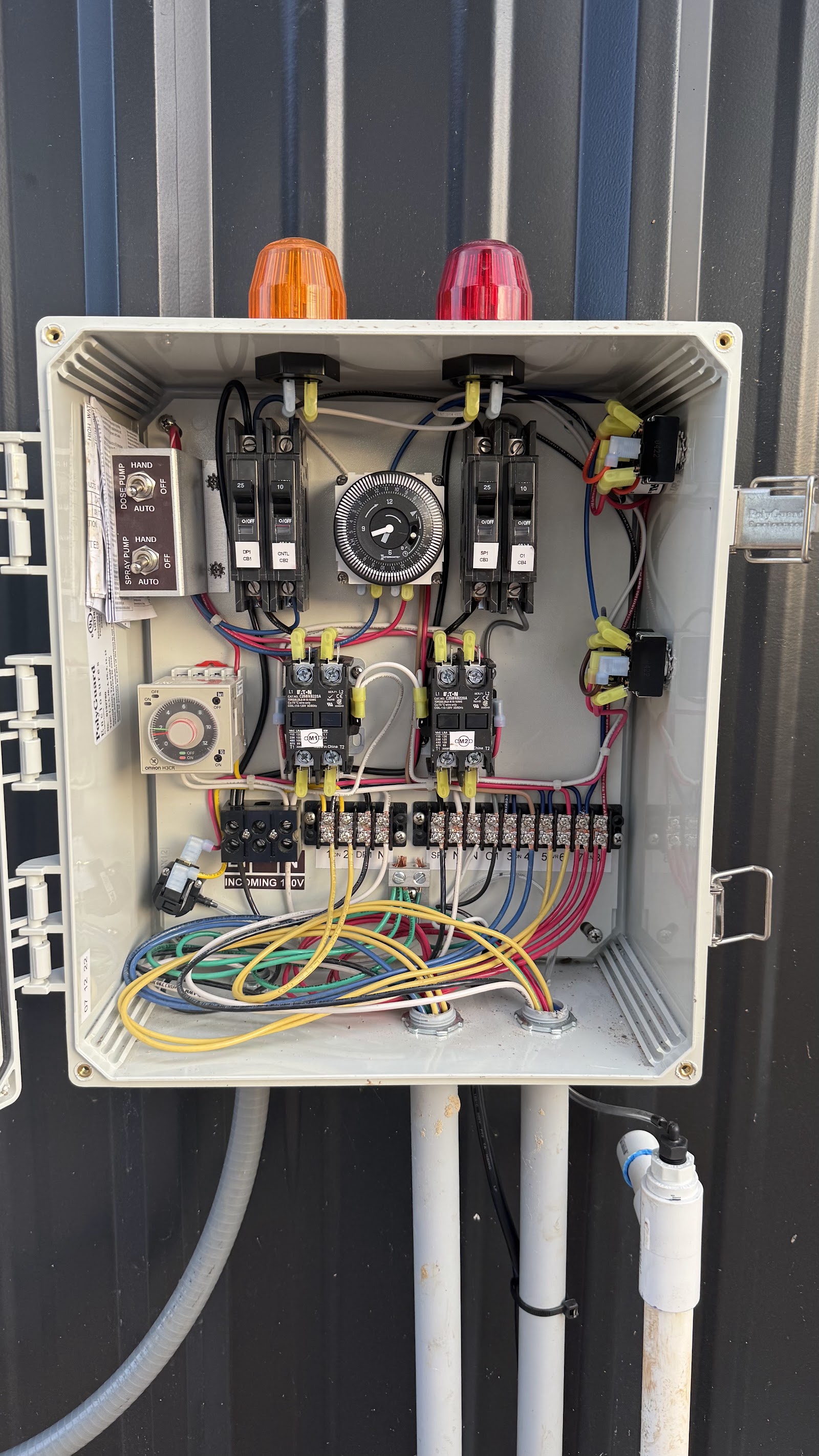
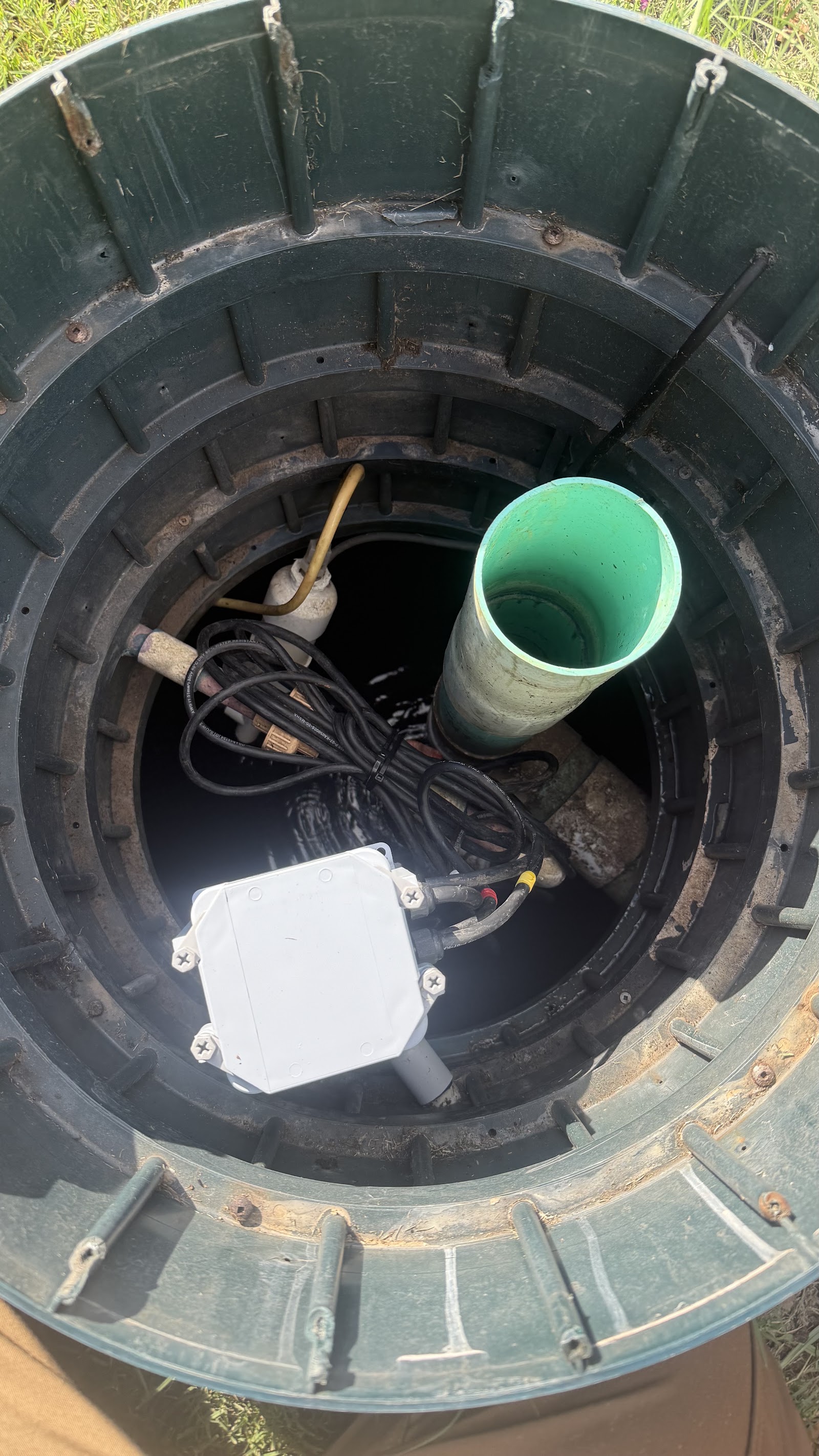
Systems with pumps, floats, timers and alarm panels have more parts that can quit. We work on the tank and the electrical side of it, track down what failed, and explain what we found in plain language before the fix.

Common calls
Alarm lights, pump not running, backups, odors, soggy yard
Before we arrive
Go easy on water use: hold off on laundry and long showers
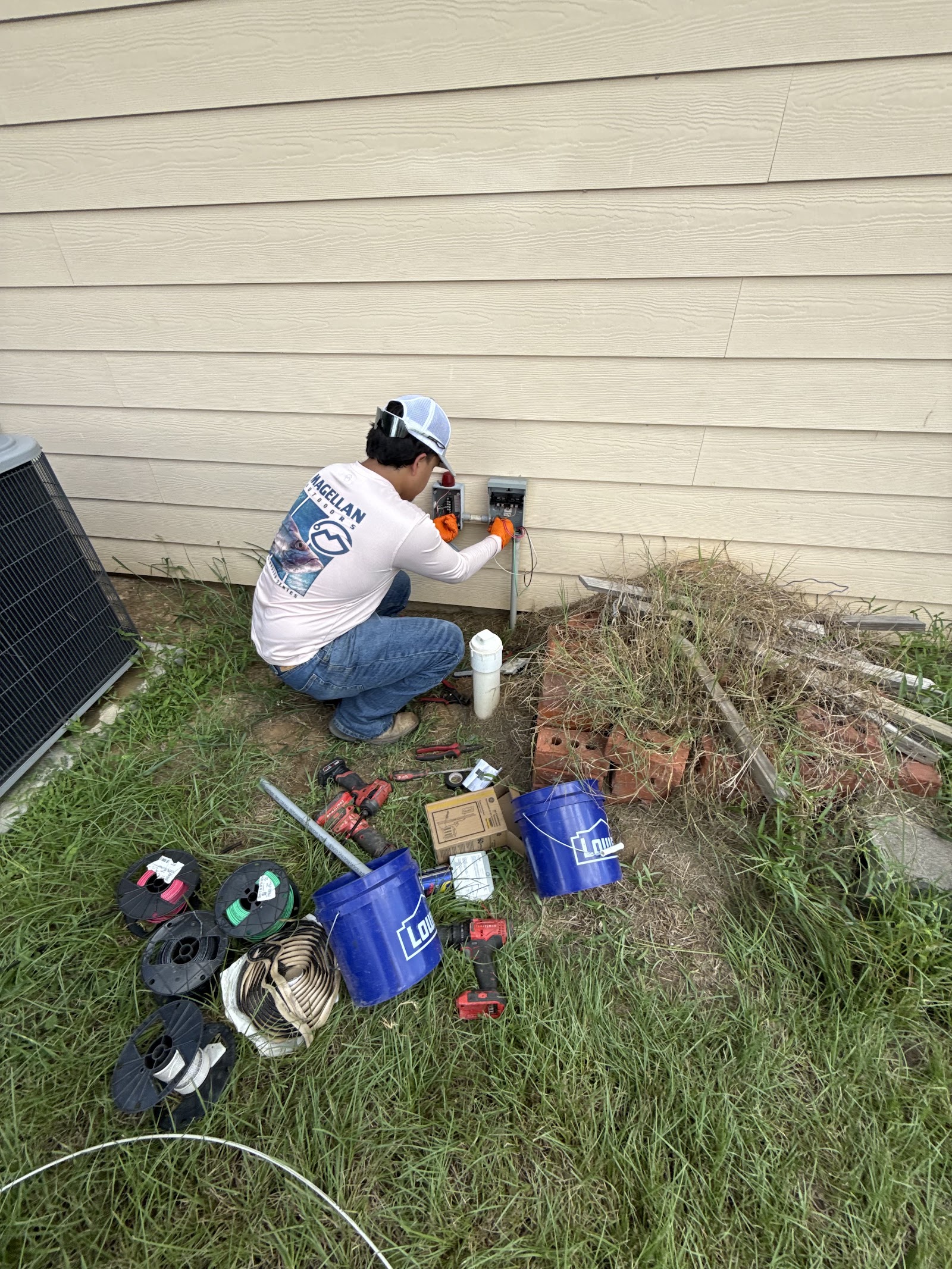
Septic pump control panel with timers, breakers, contactors and warning beacons mounted on a metal wall Overhead view inside a septic tank riser showing the pump, wiring, control box and green PVC outlet pipe Septic technician wiring an electrical box on a house exterior beside tools and wire spools
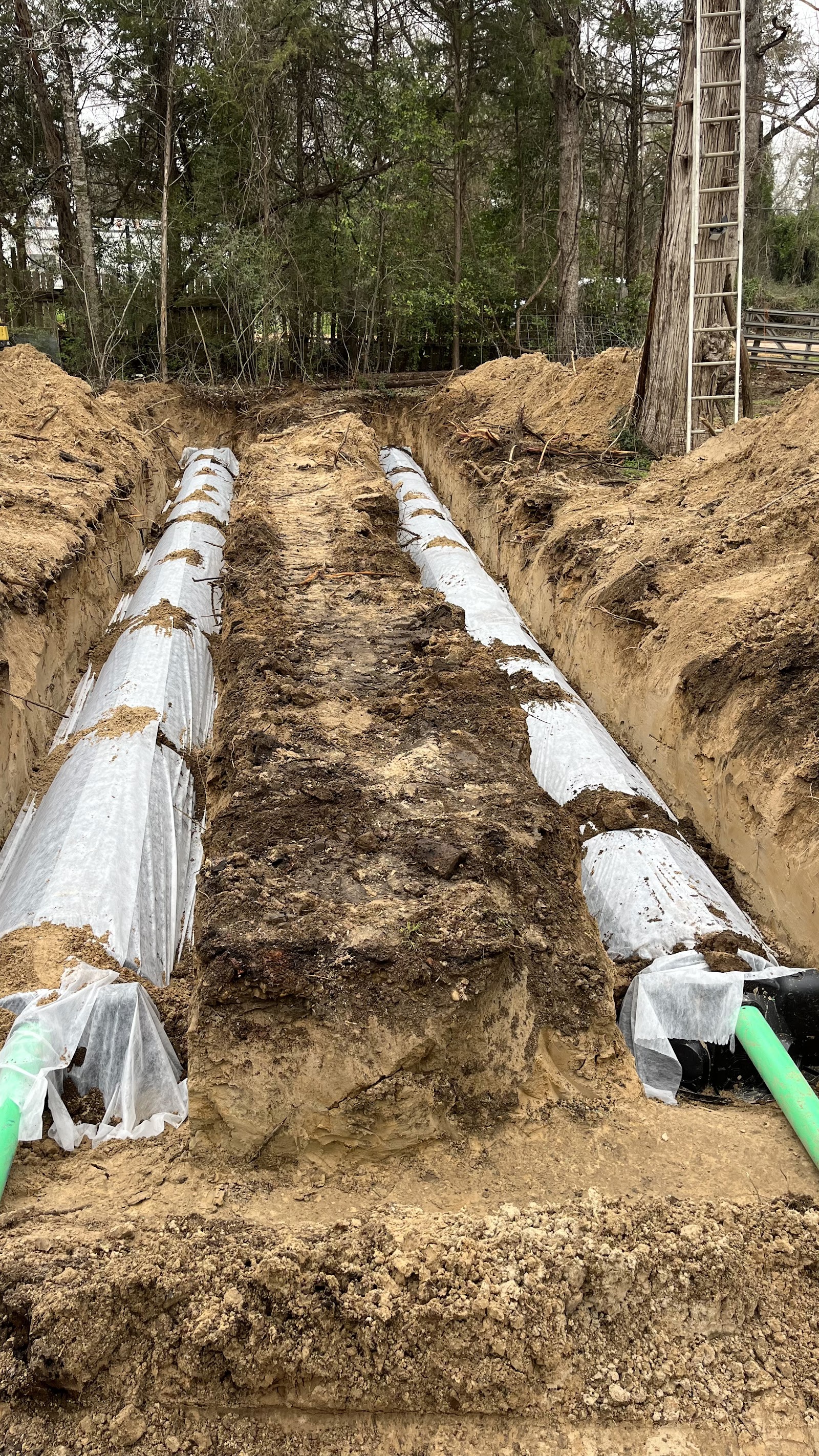
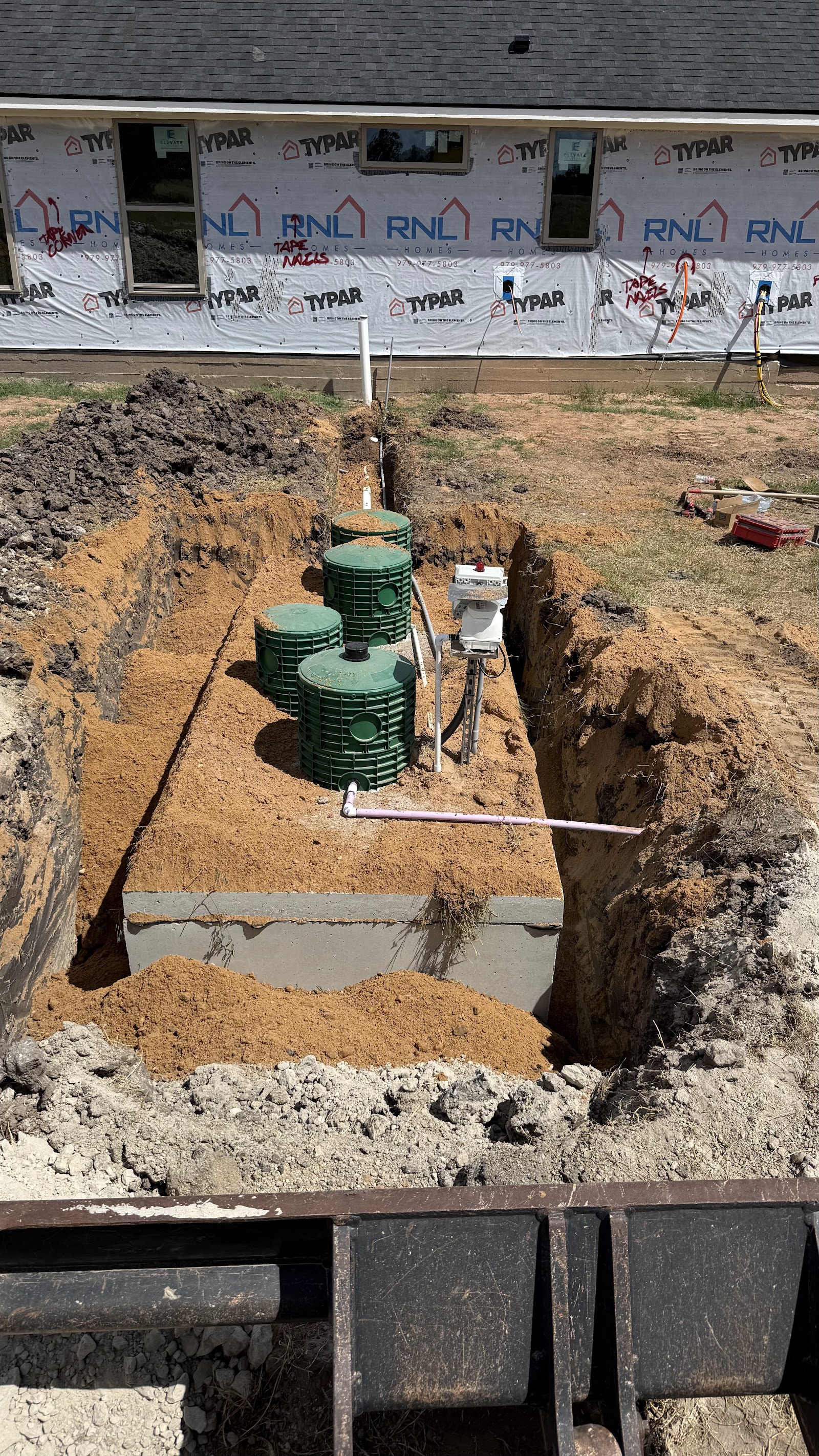
New septic drainfield install: excavated trench with geotextile-wrapped drain lines and green pipes Green septic tank risers and white control box installed in a trench beside a house under construction

Septic installs

A new septic system is a long-term part of the property. How it's laid out on day one decides how easy it is to live with for years.

We install new systems for new construction and replace systems that have failed. Since we also maintain and repair what we put in, we set tanks, risers, lines and controls with the next service call in mind.

Good for
New builds off sewer, and replacing a system that's worn out
Call early
Before the house plans are final, so the system fits the lot

Septic questions we hear a lot

General guidance below. Every system is different, so call if you want an answer about yours.

How often should a septic tank be pumped?

The EPA's general guideline is every 3 to 5 years for a typical household. The real interval depends on the size of the tank, how many people live in the house, how much water you use, and whether you run a garbage disposal (which adds solids).

A big tank with two people in the house can go longer. A smaller tank with a full house may need it sooner. Give us your tank size and household and we'll give you a recommendation based on your usage.

How often should a septic system be inspected?

The EPA suggests having a system inspected every 1 to 3 years. Systems with pumps, floats, timers and alarm panels have more moving and electrical parts, so they're worth checking on the more frequent end of that range.

An inspection is also smart any time something changes: more people move in, you notice a smell or wet spot, or you're not sure when the system was last looked at.

How much does septic pumping cost, and what affects the price?

The biggest factors are tank size, how easy the lids are to reach, and how long it's been since the tank was last pumped. Lids that are buried need to be dug up first, which adds time. Tanks with risers brought up to ground level are quicker to open.

Call with your tank size and where the lids are (if you know) and we can talk through what to expect for your property before anyone shows up.

What are the warning signs that a septic system needs repair?

Watch for drains that slow down all over the house, gurgling in the pipes, sewage smells inside or in the yard, water backing up into tubs or floor drains, and soggy or unusually green grass over the tank or drainfield.

If your system has a control panel, an alarm light or buzzer is the clearest sign of all. Cut back on water use and give us a call.

What should I know before having a new septic system installed?

In Texas, on-site sewage systems generally need a permit and a look at the site and soil before any digging starts. The soil, the lot size and the number of bedrooms all shape what kind of system makes sense and where it can go.

Bring us in early, while the house plans can still move. Think about where trucks will need to reach the tank later, keep driveways and future buildings off the drainfield, and ask for lids at grade so maintenance stays simple.

Not sure which service fits?

Describe what's going on with your system and we'll point you the right way. No guesswork, no runaround.

(979) 213-3460

Mon–Fri, 7 AM to 6 PM